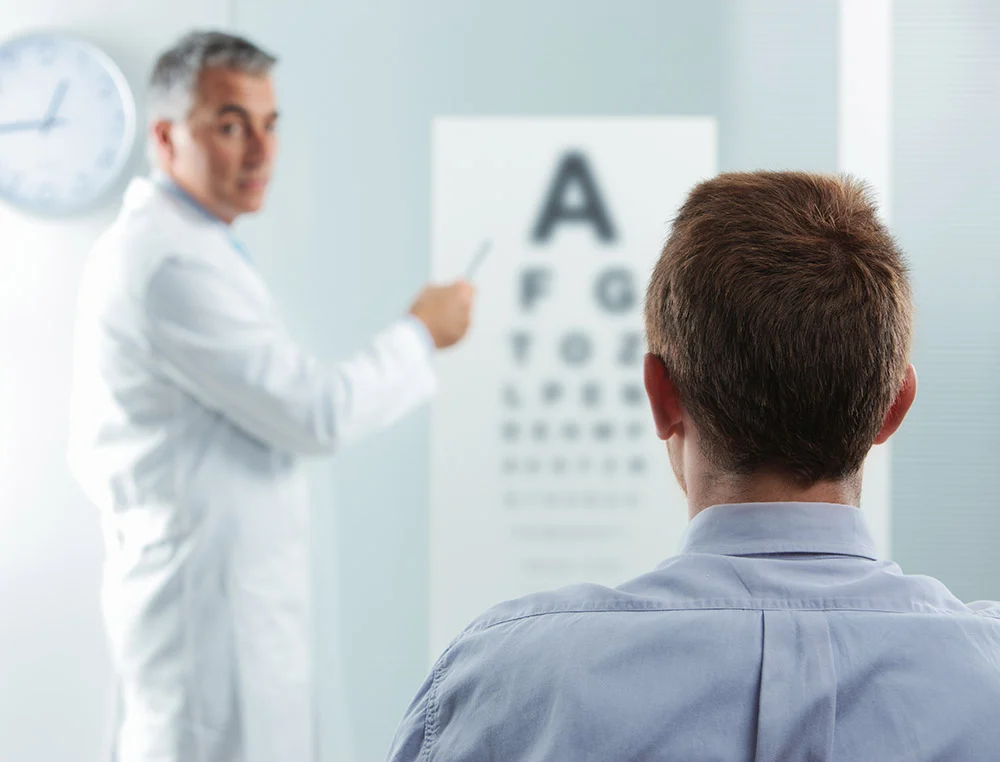
Most healthy adults should have a comprehensive eye exam every one to two years, and sooner if they have symptoms, a medical condition like diabetes, or a family history of eye disease. The right schedule depends on your age, your risk factors, and how well you see today. Below, we answer the questions patients ask us most often at our Aiea ophthalmology office.
What Is a Comprehensive Eye Exam?
A comprehensive eye exam is a complete check of your vision and eye health. It goes beyond reading an eye chart. Your ophthalmologist tests how well you see, checks your eye pressure, examines the front of your eye, and looks at the optic nerve and retina in the back of your eye. In many cases, the eyes are dilated so the doctor can see these structures clearly.
This matters because many serious eye diseases cause no pain and no early symptoms. A comprehensive exam can find them before they cost you vision. You can learn more about what we check on our eye exam page.
How Often Should Adults Under 40 Get an Eye Exam?
If you are under 40, have no symptoms, and have no risk factors, an exam every few years is usually enough. The American Academy of Ophthalmology recommends a baseline exam by age 40 for healthy adults, because that is when early signs of eye disease often begin to appear.
You should be seen more often if you:
- Wear glasses or contact lenses, since your prescription may change
- Have diabetes, high blood pressure, or an autoimmune condition
- Have a family history of glaucoma, macular degeneration, or retinal problems
- Have had an eye injury or eye surgery
- Spend many hours a day on screens and notice eye strain or headaches
How Often Should Adults Over 40 Get an Eye Exam?
After 40, your risk of eye disease rises, so regular exams become more important. As a general guide, healthy adults in their 40s and early 50s should be checked every two to four years. Adults 55 to 64 should be checked every one to three years. Adults 65 and older should be checked every one to two years.
These are general ranges. Your ophthalmologist may suggest a shorter interval based on what we find. Age-related conditions such as cataracts, glaucoma, and macular degeneration are much easier to manage when they are caught early. You can read the full guidance on the American Academy of Ophthalmology website.
How Often Do People With Diabetes Need an Eye Exam?
People with diabetes need a dilated eye exam at least once a year. Diabetes can damage the small blood vessels in the retina, a condition called diabetic retinopathy. It often causes no symptoms until the damage is advanced.
If you have been diagnosed with diabetes, do not wait for blurry vision to schedule a visit. Our diabetic eye exams are designed to catch changes early. For a deeper look, read our guide on how often diabetics need a dilated eye exam. The National Eye Institute also explains why dilated eye exams matter.
Do I Need an Eye Exam If I See Perfectly Fine?
Yes. Good vision does not always mean healthy eyes. Glaucoma, for example, slowly damages your side vision, and many people do not notice until significant loss has occurred. Early macular degeneration and retinal tears can also be present while your 20/20 vision stays the same.
A routine exam is the only reliable way to find these problems early. Learn the early warning signs of glaucoma so you know what to watch for in between visits.
How Often Should Children Get an Eye Exam?
Children should have their vision checked at regular well-child visits, and they should see an eye doctor if a problem is suspected. Signs to watch for include squinting, sitting very close to the TV, frequent headaches, eye rubbing, or trouble reading the board at school.
Nearsightedness often starts in childhood and can change quickly as kids grow. If your child is diagnosed, ask us about myopia care and how often follow-up visits should happen.
When Should I See an Eye Doctor Right Away?
Do not wait for your next scheduled exam if you notice any of these changes:
- Sudden blurry vision or loss of vision in one or both eyes
- A sudden shower of new floaters or flashes of light
- A shadow or curtain across part of your vision
- Eye pain, a red eye that does not improve, or light sensitivity
- Double vision or halos around lights
New floaters and flashes can signal a retinal problem. Read whether floaters and flashes are an emergency, and call our office promptly if you are unsure.
Should I See an Ophthalmologist or an Optometrist for My Exam?
Both can perform routine eye exams. An ophthalmologist is a medical doctor who can also diagnose and treat eye disease and perform eye surgery. That means you can get your exam, your diagnosis, and your treatment plan under one roof. Our guide explains the difference between an ophthalmologist and an optometrist in more detail.
Where Can I Get a Comprehensive Eye Exam Near Me in Aiea?
Omphroy Eye Care is located at 98-1247 Kaahumanu St., Suite 118A in Aiea, Hawaii. We welcome patients from Pearl City, Waipahu, Honolulu, Mililani, and Kaneohe. If you are searching for an ophthalmologist near Honolulu or an ophthalmologist near Pearl City, our office is an easy drive. Our hours are Monday through Friday, 8:00 am to 4:00 pm.
What Should I Bring to My Eye Exam?
Bring your current glasses or contact lenses, a list of your medications, your insurance card, and any records from previous eye doctors. If your eyes will be dilated, plan for some light sensitivity afterward and consider bringing sunglasses. See our checklist of what to bring to your first eye doctor appointment, and visit our new patients page to get started.
Schedule Your Comprehensive Eye Exam in Aiea
If it has been more than a year or two since your last exam, now is a good time to book one. Call Omphroy Eye Care at (808) 487-7700 or request an appointment online. We will help you set a schedule that fits your age, your health, and your eyes.