Hyperopia (Farsightedness) Diagnosis & Correction in Aiea
Hyperopia, or farsightedness, causes difficulty focusing on nearby objects while distant vision remains relatively clear. If you struggle with reading, close-up work, or experience eye strain during near tasks, hyperopia may be the cause. Dr. Luis C. Omphroy at Omphroy Eye Care provides thorough evaluation and effective correction for hyperopia at every age.
Request an AppointmentWhat Is Hyperopia?
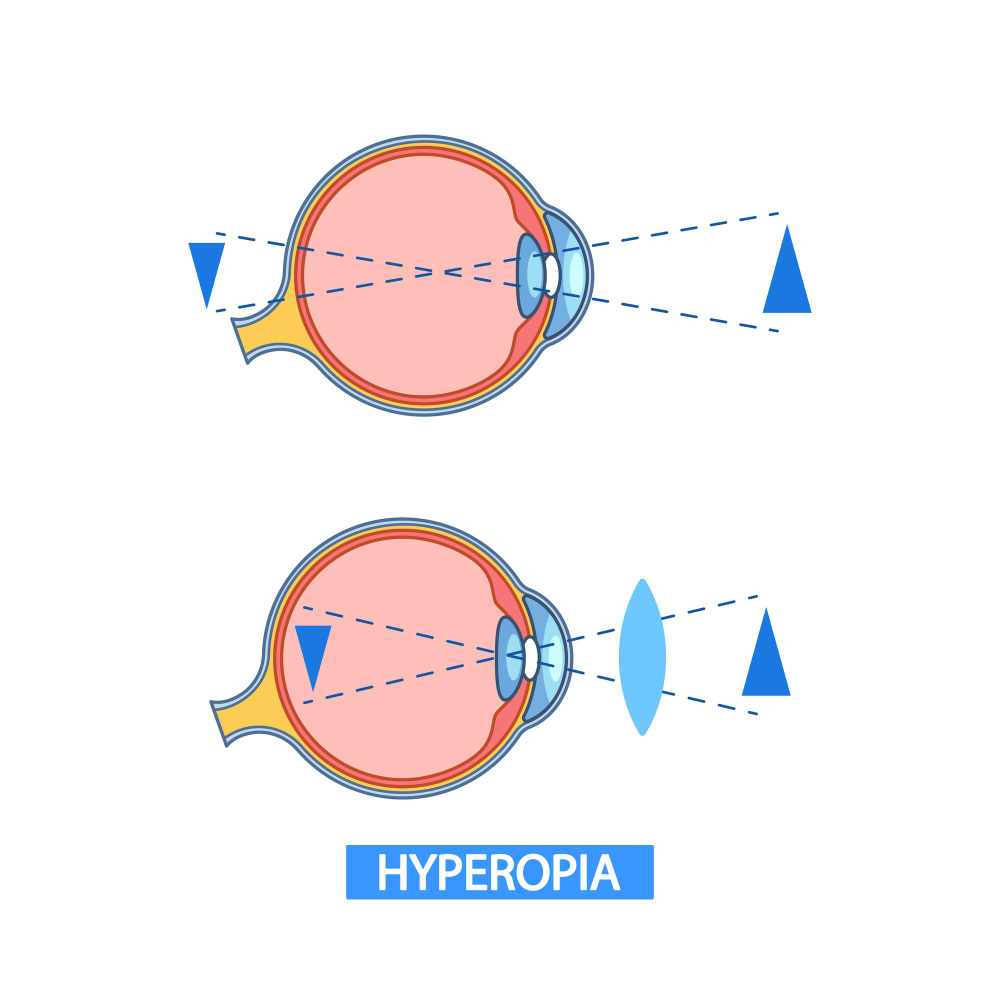
Hyperopia occurs when your eyeball is shorter than normal, or your cornea has too little curvature, causing light to focus behind your retina rather than directly on it. This makes it harder to see nearby objects clearly, though distant vision is often less affected—especially in younger patients whose eyes can compensate through accommodation.
Hyperopia is present from birth in many people, though symptoms often become more noticeable with age as the eye’s natural ability to compensate (accommodate) diminishes, particularly after age 40.
Symptoms of Hyperopia
- Difficulty focusing on close objects like books or phones
- Eye strain, especially during reading or near work
- Headaches after close-up tasks
- Squinting to see nearby objects clearly
- Fatigue when doing near-vision tasks
- In children: possible crossed eyes (strabismus) if hyperopia is significant
Diagnosing Hyperopia
Hyperopia is diagnosed during a comprehensive eye exam. Dr. Omphroy performs refraction testing to precisely measure your prescription and determine the degree of farsightedness. This is particularly important for children, as significant untreated hyperopia can affect visual development and contribute to crossed eyes.
Treatment Options for Hyperopia
Eyeglasses: Convex lenses correct hyperopia by helping light focus properly on the retina, providing clear near vision.
Contact Lenses: Various contact lens options effectively correct hyperopia while offering convenience and a natural field of view.
Reading Glasses: For mild hyperopia primarily affecting near vision, reading glasses may be sufficient, especially for patients who have good distance vision otherwise.
Refractive Surgery: Surgical options can correct hyperopia for appropriate candidates, reducing dependence on corrective lenses.
Hyperopia and Presbyopia
As we age, everyone experiences some degree of presbyopia—age-related difficulty focusing on near objects due to the lens losing flexibility. Patients with hyperopia often notice presbyopia symptoms earlier and more significantly than those with normal vision or myopia, since both conditions compound the difficulty focusing up close.
Schedule Your Hyperopia Evaluation
If you’re struggling with near vision tasks or experiencing eye strain, call Omphroy Eye Care at (808) 487-7700 to schedule a comprehensive evaluation. Dr. Omphroy will accurately diagnose your hyperopia and recommend the best correction for your needs.
Hyperopia FAQs
Is hyperopia the same as presbyopia?
No, though they cause similar symptoms. Hyperopia is a refractive error present from birth or early life due to eye shape. Presbyopia is an age-related condition affecting nearly everyone as the eye’s lens loses flexibility, typically starting around age 40.
Can hyperopia affect children’s development?
Yes, significant untreated hyperopia in children can contribute to crossed eyes (strabismus) or amblyopia (lazy eye), affecting normal visual development. This is why pediatric eye exams are important.
Does hyperopia get worse with age?
Hyperopia itself is often relatively stable throughout life, but symptoms may seem to worsen with age as presbyopia adds to the difficulty focusing on near objects.
Can hyperopia be cured?
While the underlying eye shape causing hyperopia cannot be reversed without surgery, hyperopia can be effectively corrected with glasses, contacts, or refractive surgery for clear vision.
Why can I see fine at a distance but not up close?
This is a classic symptom of hyperopia (or presbyopia if you’re over 40). Your eye focuses light behind the retina, making close objects harder to focus on than distant ones, especially as accommodation ability decreases with age.