Astigmatism Diagnosis & Correction in Aiea
Astigmatism is one of the most common vision conditions, affecting a significant percentage of the population to some degree. If you experience blurred or distorted vision at any distance, headaches, or eye strain, astigmatism may be the cause. At Omphroy Eye Care, Dr. Luis C. Omphroy provides accurate diagnosis and effective correction options for astigmatism of all types and severities.
Request an AppointmentWhat Is Astigmatism?
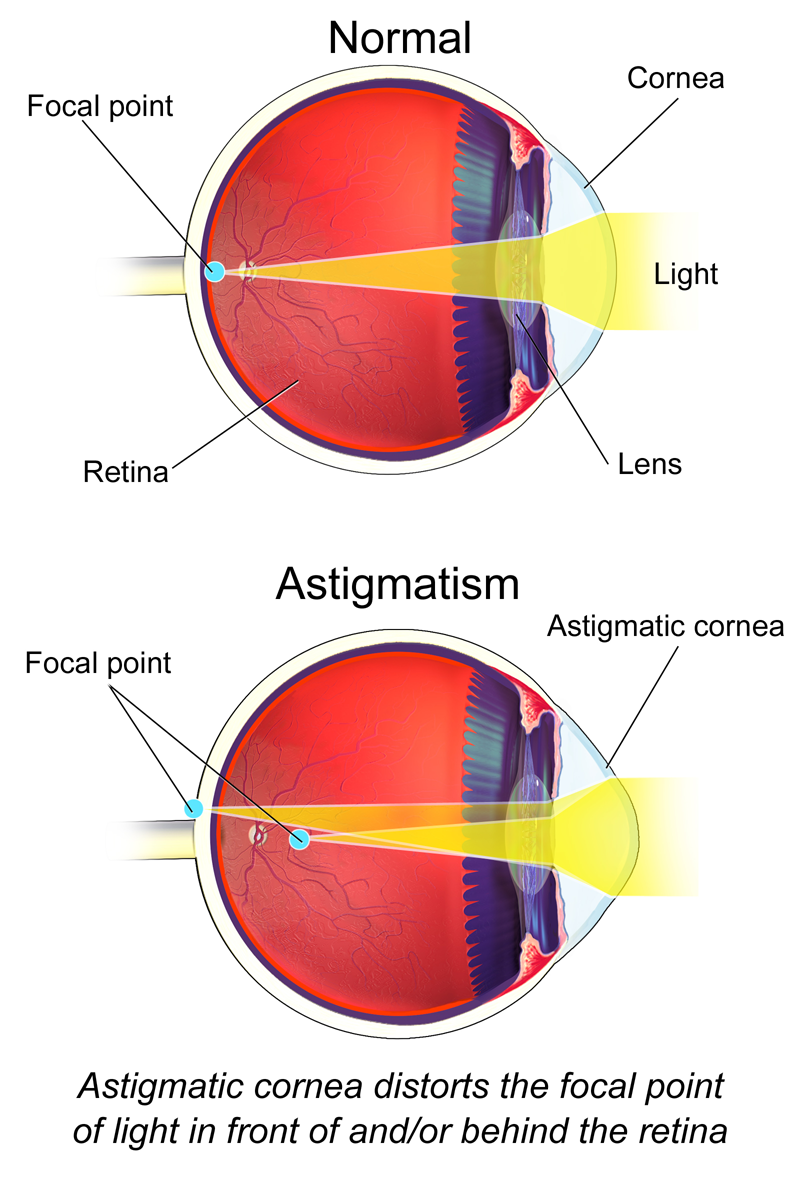
Astigmatism occurs when your cornea or lens has an irregular curvature, rather than being perfectly round like a basketball. Instead, the eye is shaped more like a football, with different curves in different directions. This irregular shape prevents light from focusing properly on your retina, causing blurred or distorted vision at all distances—near, intermediate, and far.
Astigmatism is extremely common and often occurs alongside other refractive errors like nearsightedness or farsightedness. Most people have at least a small degree of astigmatism, though many don’t require correction unless it significantly affects their vision.
Symptoms of Astigmatism
- Blurred or distorted vision at any distance
- Eye strain or discomfort
- Headaches, especially after visual tasks
- Squinting to see clearly
- Difficulty with night vision
- Fatigue from visual tasks like reading or computer work
Diagnosing Astigmatism
Astigmatism is diagnosed during a comprehensive eye exam. Dr. Omphroy uses precise refraction testing and corneal topography to measure the exact curvature of your cornea and determine the degree and axis of your astigmatism. This detailed measurement allows for accurate vision correction.
Treatment Options for Astigmatism
Eyeglasses: Glasses with cylindrical lenses compensate for the irregular curvature of your eye, redirecting light to focus properly on your retina.
Contact Lenses: Toric contact lenses are specially designed to correct astigmatism, providing clear vision with the convenience of contacts.
Refractive Surgery: In some cases, procedures that reshape the cornea can permanently correct astigmatism, reducing or eliminating the need for corrective lenses.
Dr. Omphroy will discuss which correction method best suits your lifestyle, degree of astigmatism, and vision goals during your comprehensive eye exam.
Schedule Your Astigmatism Evaluation
If you’re experiencing blurred vision or eye strain, call Omphroy Eye Care at (808) 487-7700 to schedule a comprehensive evaluation. Dr. Omphroy will accurately diagnose your astigmatism and recommend the best correction option for clear, comfortable vision.
Astigmatism FAQs
Can astigmatism get worse over time?
Astigmatism can change gradually over time, which is why regular eye exams are important to update your prescription as needed. Significant changes in astigmatism, especially in younger patients, should be evaluated by Dr. Omphroy.
Is astigmatism hereditary?
Yes, astigmatism often runs in families. If your parents have astigmatism, you have an increased likelihood of developing it as well.
Can astigmatism be cured?
While astigmatism itself (the irregular corneal shape) typically cannot be reversed without surgery, it can be effectively corrected with glasses, contacts, or refractive surgery to provide clear vision.
Do all contact lenses work for astigmatism?
No, standard contact lenses don’t correct astigmatism. You need toric contact lenses, which are specifically designed with different powers in different meridians to correct the irregular curvature.
Can children have astigmatism?
Yes, astigmatism can be present from birth or develop during childhood. Regular pediatric eye exams help detect and correct astigmatism early to support normal visual development.