Age-Related Macular Degeneration Diagnosis & Management in Aiea
Age-related macular degeneration (AMD) is a leading cause of vision loss in adults over 60. This progressive condition affects your central vision, impacting your ability to read, recognize faces, and perform detailed tasks. At Omphroy Eye Care, Dr. Luis C. Omphroy provides comprehensive screening, diagnosis, and management for AMD to help preserve your vision.
Request an AppointmentWhat Is Age-Related Macular Degeneration?
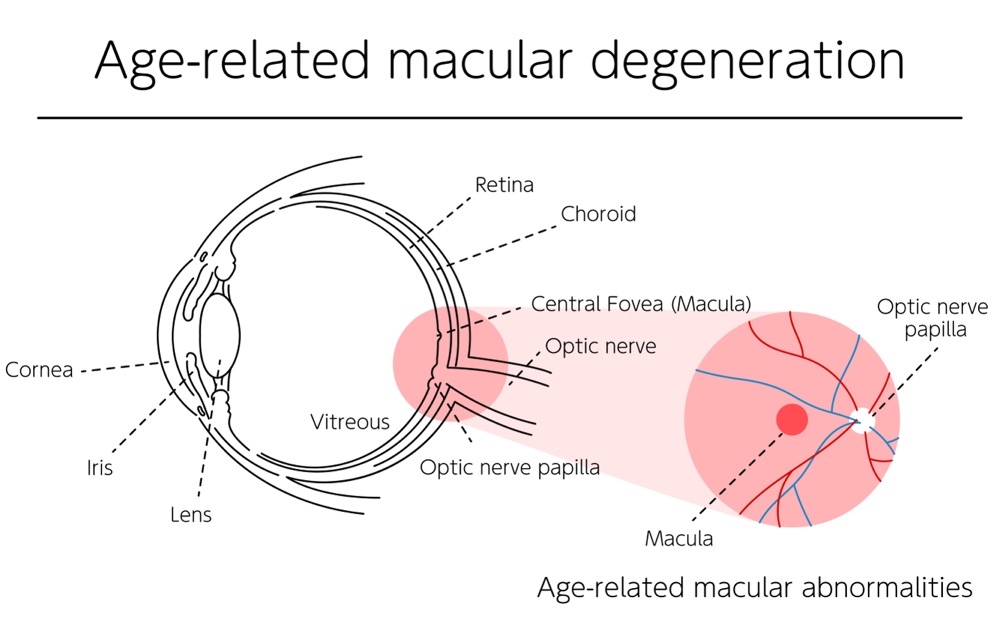
AMD affects the macula—the central portion of your retina responsible for sharp, detailed vision needed for reading, driving, and recognizing faces. As AMD progresses, it damages macular tissue, causing blurred or distorted central vision while typically sparing peripheral vision.
There are two main forms of AMD:
Dry AMD
The more common form, accounting for about 80-90% of cases. Dry AMD involves gradual thinning of the macula and accumulation of drusen (yellow deposits) under the retina. Vision loss typically progresses slowly over years.
Wet AMD
Less common but more severe, wet AMD occurs when abnormal blood vessels grow beneath the retina and leak fluid or blood, causing rapid and significant vision loss if untreated. Wet AMD requires prompt treatment to prevent severe vision damage.
Symptoms of Macular Degeneration
- Blurred or distorted central vision
- Difficulty reading or recognizing faces
- Straight lines appearing wavy or bent
- Dark or empty areas in your central vision
- Colors appearing less vivid
- Increased difficulty adapting to low light
Risk Factors for AMD
- Age over 60
- Family history of AMD
- Smoking (significantly increases risk)
- Obesity
- Cardiovascular disease
- Prolonged UV exposure without eye protection
- Caucasian ethnicity (higher prevalence)
Diagnosing Macular Degeneration
Dr. Omphroy diagnoses AMD through a comprehensive dilated eye exam, using our Maestro optical coherence tomography (OCT) machine to obtain detailed images of your macula and detect early changes, sometimes before you notice symptoms.
Treatment Options for AMD
For Dry AMD: While there’s no cure for dry AMD, specific vitamin supplements (AREDS2 formula) have been shown to slow progression in certain patients. Regular monitoring allows Dr. Omphroy to track changes and adjust management as needed.
For Wet AMD: Anti-VEGF injections are the primary treatment, helping to shrink abnormal blood vessels and reduce leakage. These injections are typically administered on a regular schedule to maintain vision and prevent further damage.
Lifestyle Modifications to Support Eye Health
Certain lifestyle changes may help slow AMD progression: quitting smoking, maintaining a healthy diet rich in leafy greens and omega-3 fatty acids, protecting your eyes from UV exposure, managing cardiovascular health, and attending regular eye exams for early detection.
Schedule Your AMD Screening
If you’re over 60 or experiencing changes in your central vision, call Omphroy Eye Care at (808) 487-7700 to schedule a comprehensive screening. Early detection is crucial for preserving vision and slowing AMD progression.
Macular Degeneration FAQs
Can macular degeneration cause complete blindness?
AMD typically doesn’t cause complete blindness because peripheral vision is usually preserved. However, it significantly affects central vision needed for reading, driving, and recognizing faces, greatly impacting quality of life.
How quickly does macular degeneration progress?
Dry AMD typically progresses slowly over years. Wet AMD can cause rapid vision loss within days to weeks if untreated, which is why prompt evaluation of any sudden vision changes is essential.
Can I prevent macular degeneration?
While you cannot completely prevent AMD, you can reduce your risk through not smoking, maintaining a healthy diet, protecting your eyes from UV exposure, and managing cardiovascular health.
Will vitamin supplements cure my AMD?
AREDS2 vitamin supplements don’t cure AMD but may help slow progression in certain patients with intermediate or advanced dry AMD. Dr. Omphroy can advise whether these supplements are appropriate for your specific situation.
How often will I need anti-VEGF injections for wet AMD?
Injection frequency varies by individual, but many patients require injections every 4-8 weeks initially, with potential spacing out over time based on your response to treatment.